


Stainless steel seamless pipe cold processing production process
With its core advantages such as strong corrosion resistance, excellent toughness and good moldability, seamless stainless steel pipes are widely used in the medical devices, petroleum, chemicals, nuclear power and building decoration industries. As the core raw material for key industries such as petroleum, chemical industry, and nuclear power, the demand for seamless stainless steel pipes is constantly expanding, but the industry operation is also facing the challenge of intensifying competition. Enterprises in the industry need to improve core competitiveness through joint venture cooperation and collective development models, combined with production process innovation, and inject impetus into the steady development of the industry. Cold rolling as the main and high-precision multi-pass rolling combined technology is the key technical support for promoting industrial upgrading.
From the current production situation,50%~80% The stainless steel pipes need to be made into finished products through cold processing, which directly drives the rapid development of cold processing technology equipment. The current cold processing technology of stainless steel seamless pipes is mainly divided into three categories: cold drawing process, cold rolling process, cold rolling process-Cold drawing joint process. Since cold-rolled steel pipes have better surface quality and smaller wall thickness differences, cold rolling process and cold rolling-The cold drawing combined process has gradually replaced the single cold drawing process and has become the mainstream production method. From international experience, cold rolling is generally used for cold processing of stainless steel pipes-Cold drawing combined process and follow"Cold rolling is the main focus and cold drawing is the auxiliary focus"technical route.
The seamless pipe cold rolling is the main method, with high-precision multi-pass rolling and drawing combined process, deeply integrating the core advantages of cold rolling and cold drawing, and achieving efficient production through scientific design and precise control. From the perspective of process principle, the cold rolling link relies on modern cold rolling pipe mills to apply extrusion and rolling force to the pipe billet, which not only reduces the outer diameter and wall thickness, but also uses the three-way compressive stress state of metal to improve plasticity. Even high alloy stainless steel pipes can be processed smoothly. Modern cold-rolled pipe mills have the ability to reduce wall volume and reduce diameter volume.80% The deformation amount can be completed on the cold rolling mill, through"Cold Rolled Wall"It can accurately control the wall thickness and meet the strict requirements for wall thickness accuracy in high-end fields such as aerospace; the cold-rolled pipe is drawn through the mold to further reduce the specifications and optimize the outer diameter accuracy. Although the deformation amount of a single pass is small, it is highly flexible, especially suitable for the final finishing of small-diameter and high-precision steel pipes; the combination of multiple passes is carried out alternately by the two, reasonably allocating the deformation amount, taking into account quality and efficiency, and avoiding the limitations of a single process.
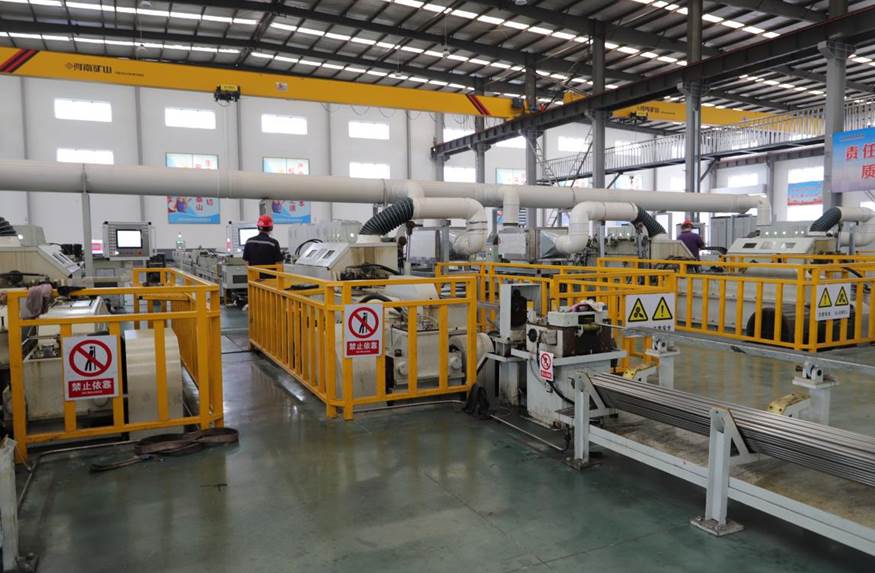
The complete process of this process is closely linked, and the quality is controlled throughout the process from raw materials to finished products. In the preparation stage of blanks, high-quality stainless steel waste pipes are required, and can be used in some scenarios.12~15mThe long pipe blank not only improves the utilization rate of the pipe rolling mill, but also reduces the downtime of the blank replacement. Then pickling and lubrication treatment is carried out: pickling removes the surface oxide scale, phosphating and saponification form a uniform lubricating film, which not only reduces equipment friction, extends the mold life, but also avoids scratches on the surface of the pipe. In the core cold rolling link, the pass and deformation amount are determined according to the product specifications, and the innovative design of high-precision pipe rolling mills is also relied on, such as using a vertical balance mechanism for inertial force and inertial torque to increase the number of round trips of the rolling mills, and the ring hole design makes the rolling block length shorter stroke length.70%, and optimize the metal deformation path with curved mandrel and optimal parabolic face type to reduce tool wear. Since multiple passes of cold processing are prone to work hardening, intermediate annealing treatment is essential, which can eliminate internal stress and restore plasticity. The cold-drawing process uses a chain cold-drawing machine, which will develop in the direction of multi-line, high-speed and fully automatic in the future, accurately controlling the outer diameter accuracy, especially suitable for the production of small-diameter steel pipes. After the cold processing is completed, the mechanical properties are adjusted through final heat treatment such as annealing and normalization, and then refined by straightening, cutting, polishing, etc., and finally, the qualified products can be put into the warehouse by passing the dimensions, surface quality, and mechanical properties.
Compared with traditional processes (single cold drawing, hot rolling) and single cold rolling processes, this combined process has significant advantages and is highly in line with the needs of industrial development. In terms of dimensional accuracy, the wall thickness tolerance of traditional hot-rolled pipes ±5%-±10%, although the single cold-extracted tube is lifted to ±1%-±3%, but it is easy to cause fluctuations due to uneven stress; the rolling and drawing bonding process passes“Cold rolled fixed wall+Cold drawing diameter”, wall thickness tolerance can be controlled within ±0.05mm Within (high-end scenarios reach±0.02mm), outer diameter tolerance ±0.3mm Within, roundness error ≤0.1mm/m, fully meet the accuracy requirements in the fields of precision machinery, nuclear power, etc. In terms of surface quality, the surface of traditional hot-rolled pipes is prone to residual oxide scale and pitting, while a single cold-drawn pipe is prone to scratches; the combined process uses cold-rolling "rolling effect", lubricating film protection and multiple passages of cold-drawing and trimming, and the final roughness reaches Ra≤0.4μm, can be used in high-end decoration or medical device fields without additional polishing.
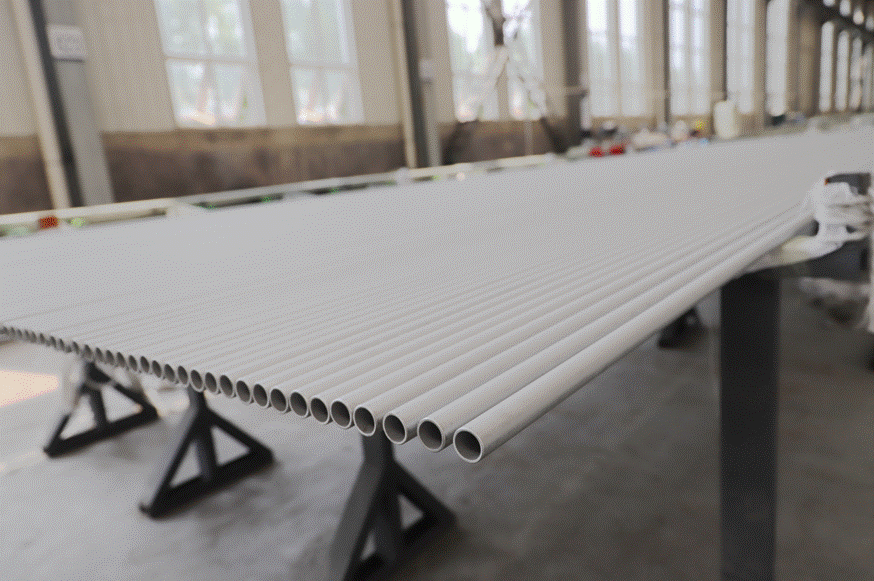
In terms of mechanical properties, this process achieves "high strength"+High toughness "balance: Multiple cold rolling refines the grains, making the tensile strength of stainless steel pipes higher than that of hot-rolled pipes 30%-50%, the intermediate annealing restores plasticity and the elongation is higher than that of a single cold-extracted tube.10%-20%, able to adapt to harsh working conditions such as petrochemical high-pressure pipelines and earthquake-resistant buildings. In terms of material and specification adaptability, traditional hot rolling is difficult to produce ≤20mm Small diameter, ≤1mm Thin-walled pipes, and high alloy materials are easily cracked; although a single cold drawing can produce small diameter pipes, thick-walled pipes have low processing efficiency; and the combined process uses "cold rolling to reduce walls+Cold drawing finishing”, can cover φ5-φ100mm caliber,0.1-5mm The wall thickness range can also be used to process stainless steel, titanium alloys, high-temperature alloys and other difficult-to-process materials. Large-scale waste pipes can even be used to produce small-scale steel pipes to simplify the types of raw materials and reduce the inventory pressure of enterprises.
In terms of production efficiency and cost control, this process cracks the "efficiency" of traditional processes-The contradiction of quality: hot rolling yield rate is only 70%-80%, single cold drawing efficiency is low (long pass interval); combined process allows cold rolling to bear 70%-80% Deformation, cold drawing burden 20%-30% The finishing volume not only increases the yield rate to 95% The above also reduces intermediate degreasing and mouth shrinking processes, shortens the production cycle 20%-30%, while saving energy and metal consumption, providing a new path for enterprises to reduce costs and increase efficiency.
Overall, the process of cold rolling in seamless pipes and high-precision multi-pass rolling and drawing combination is not only an inevitable result of the development of cold processing technology, but also the core support for the stainless steel seamless pipe industry to respond to market demand and enhance competitiveness. Its comprehensive advantages in precision, quality and efficiency can not only meet the diversified needs of many fields such as daily necessities, heavy industry, and high-end equipment, but also promote the transformation of the industry to high-end and precision, laying a solid material foundation for technological upgrading in key industries such as petrochemicals, aerospace, and medical devices.
Stainless steel welding defects and countermeasures
Welding process of stainless steel large diameter thick wall pipe


