


Welding process of stainless steel large diameter thick wall pipe
The welding process of stainless steel large diameter thick-walled pipes is a very challenging and critical technology in the field of industrial manufacturing. Because these pipelines are widely used in petrochemical, nuclear power engineering and other industries, they often need to be in service for a long time in harsh environments such as high pressure, high temperature, and strong corrosion. Therefore, the quality requirements for welding are extremely strict. Not only should sufficient mechanical properties (such as strength, toughness, hardness, etc.), but they should also have excellent corrosion resistance and sealing. Due to the characteristics of large diameters and thick walls, they face problems such as insufficient permeability, concentrated stress, and easy cracks during welding. Therefore, welding methods such as plasma welding, argon arc welding, submerged arc welding, etc. must be reasonably selected according to the characteristics of different materials, and targeted process parameters and operating specifications must be formulated to ensure welding quality.
There are significant differences in welding characteristics of stainless steels of different materials. The main components of austenitic stainless steel are chromium and nickel, which have excellent corrosion resistance, plasticity and toughness. But the welding temperature is at 600-850 Intergranular corrosion is prone to occur when the sensitization temperature range of ℃. Secondly, the linear expansion coefficient of austenitic stainless steel is relatively large, which will produce greater thermal stress and deformation during the welding process, and the weld shrinkage rate is high, making it prone to thermal cracks. Ferrite stainless steel mainly relies on chromium elements to achieve corrosion resistance, and its chromium content is usually 11%-30% between. During welding, ferrite stainless steel is at high temperature (900 It is easy to cause sharp grain coarseness at ℃ or above) to cause a decrease in low-temperature toughness. The ferrite stainless steel has poor thermal conductivity and low thermal expansion coefficient, which makes it easy to cause cold cracks in concentrated stress. Martensite stainless steel contains a higher amount of carbon and has higher strength and hardness, but has poor plasticity and toughness. Duplex stainless steel contains two phase structures: austenite and ferrite, and has the toughness, corrosion resistance of austenite stainless steel and the high strength of ferrite stainless steel. The key to welding is to ensure the ratio of austenite and ferrite in the weld, and the volume fraction of the austenite phase is usually required.30%-50%, to ensure good mechanical properties and corrosion resistance of welded joints. During welding, excessive heat input or cooling too slowly will cause too much ferrite phase and increase the brittleness of the weld; excessive heat input or cooling too quickly will cause insufficient austenite phase and reduce the corrosion resistance and toughness of the weld.
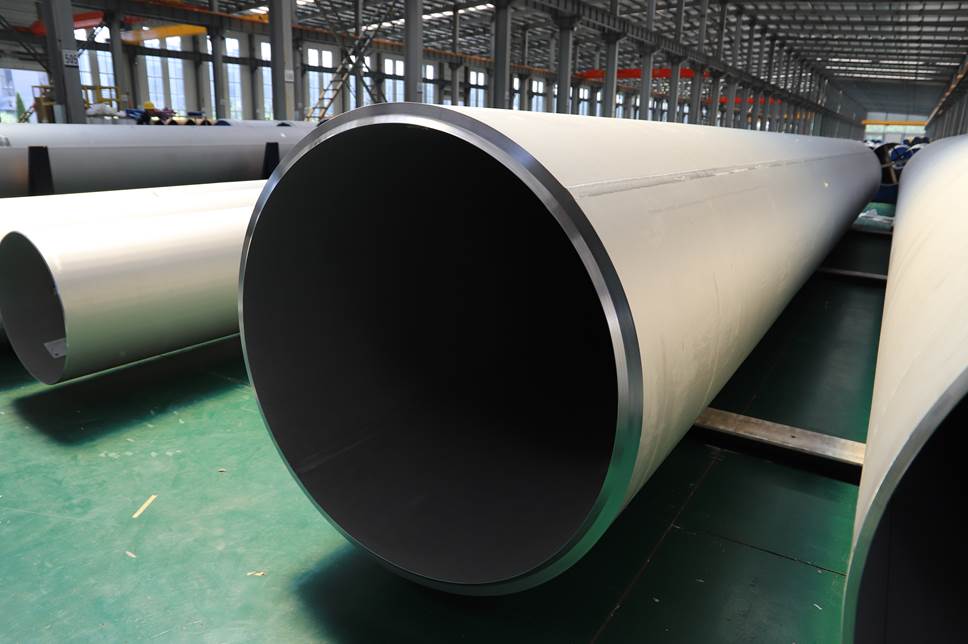
For large diameter thick wall pipes, plasma welding,TIG The process adaptation of welding and submerged arc welding is closely related to the bevel design. Because of its high energy density, stable arc and small heat input, plasma welding is suitable for rapid welding of thin plates and medium-thick plates. Especially for large-diameter thick-walled pipes, deep melt welding can be achieved and welding efficiency can be improved.TIG Welding is known for its high-quality welds, good weld forming and low welding deformation, and is suitable for occasions where weld quality requirements are high. Submerged arc welding has been widely used in welding large-diameter thick-wall pipes due to its advantages of high production efficiency, good welding quality and good working conditions. In the design of bevels, reasonable choices must be made based on the material characteristics of stainless steel and welding process requirements. For ferrite stainless steel, because it is prone to grain coarseness at high temperatures, the heat-affected zone should be minimized when designing the bevel to avoid the generation of too many ferrite phases. The bevel design of duplex stainless steel needs to balance the ratio of austenite and ferrite phases to ensure that the weld has good mechanical properties and corrosion resistance.
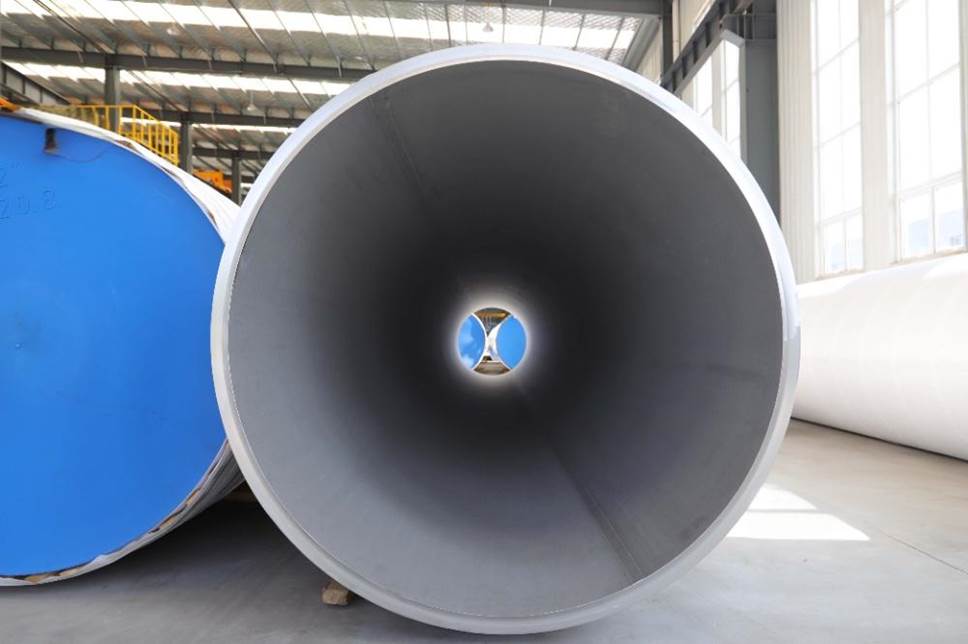
Therefore, for the different materials and welding requirements of large diameter thick-wall pipes, plasma welding is reasonably selected,TIG Welding processes such as welding, submerged arc welding, and designing appropriate bevel shapes and sizes are the key to achieving high-quality welding. In practical applications, different materials often use a combination process: for austenite thick-walled pipes.“TIGBottoming+Submerged arc welding filling”,TIG Ensure the corrosion resistance of the roots and improve the efficiency of submerged arc welding;2205 Duplex steel“Plasma base+ TIG cover surface, plasma precise heat control and maintain two phase balance,TIG Refine grains to prevent brittlement. No matter what welding method or combination process is used, welding of stainless steel large-diameter thick-wall pipes of different materials requires unified control of some common process points. Cleaning before welding is the primary link in ensuring welding quality. The scale, oil stains, rust and other impurities on the surface of the base material will cause defects such as pores, slag inclusions, cracks, etc. on the weld. Before welding, mechanical grinding or chemical pickling is usually used. The cleaning range should cover the sufficient areas on both sides of the bevel to ensure that the cleaned surface is free of impurities, no oxide scale, and reveals a metallic luster. For austenitic stainless steel, it is necessary to rinse it with clean water after pickling to avoid the residual acid from corroding the base material.
To sum up, welding of stainless steel large-diameter thick-wall pipes of different materials is a systematic project, which requires selecting appropriate welding methods based on the characteristics of the material, and formulating scientific and reasonable process parameters and operating specifications. In practical applications, in order to take into account both welding quality and production efficiency,"Composite technology", such as TIG Welding base+Submerged arc welding fill cover. At the same time, through strict pre-weld cleaning, deformation control, parameter optimization and heat treatment measures, we ensure that the welding performance meets industrial requirements and provides reliable guarantees for the safe and stable operation of related industries.
Stainless steel seamless pipe cold processing production process
Manufacturing process of stainless steel U-shaped tube


