


JCO Forming Process of Stainless Steel Welded Pipe
The JCO forming process is a forming process for large-diameter straight seam submerged arc welded pipes developed by the German company SMS MEER in the 1990s. It is a relatively advanced way of forming steel pipes. The JCO production line has less one-time investment and lower mold cost compared with the UOE production line. Especially when producing small batches and multiple specifications of steel pipes, it has high flexibility, short adjustment time and low cost. This forming method is very suitable for medium-sized enterprises. In recent years, it has been widely recognized in the world and has become the mainstream forming technology for modern straight seam welded pipes in China.
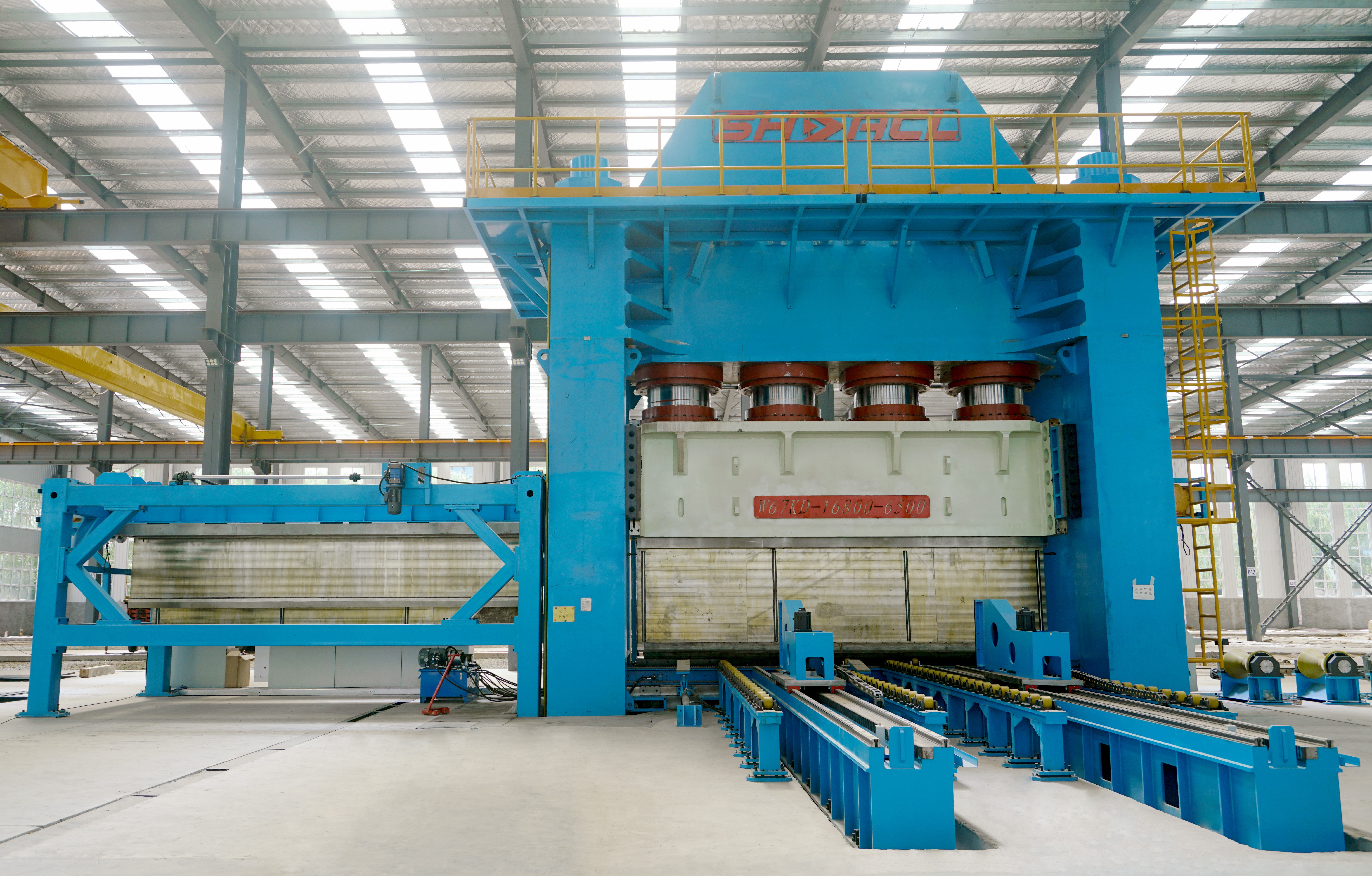
I.Overview of the JCO Forming Process
The JCO forming of stainless steel pipes is a method of manufacturing straight seam welded pipes through a progressive bending process. The JCO forming process is divided into three stages, successively forming "J", "C" and "O" shaped tube blanks. The specific steps are as follows:
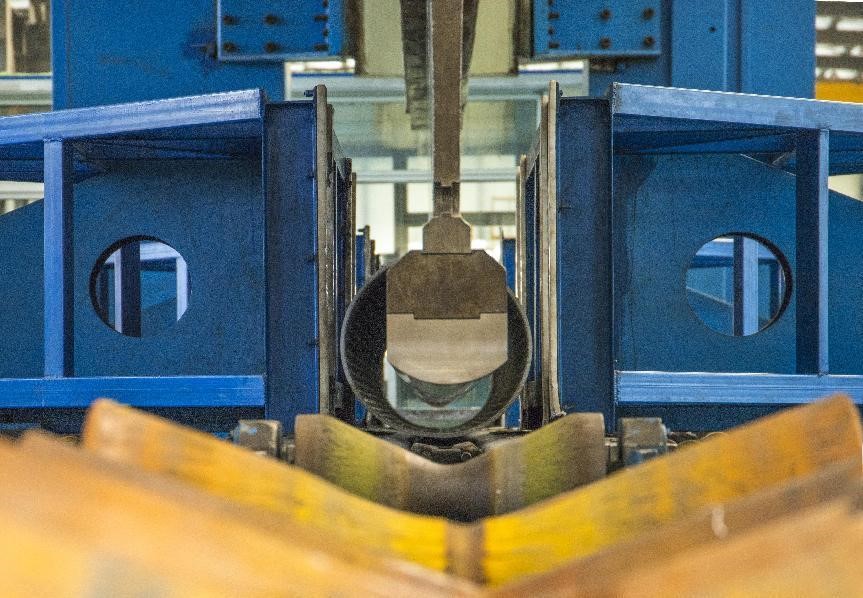
J-shaped stage: The pre-bent steel plate enters the forming machine transversely, and is bent section by section according to the set step length starting from one side. When the upper die presses down, half of the steel plate is pressed into a lying "J" shape, and at this time, only the bending of the front half of the steel plate is completed.
C-shaped stage: The steel plate moves rapidly transversely to the other side, and the unformed part is bent section by section with the same step length to form a lying "C" shaped tube blank.
O-shaped stage: The final bending is carried out in the middle of the "C" shaped tube blank to reduce the opening to within about 120mm, and finally an open "O" shaped tube blank is formed, and then the seam is closed and welded.
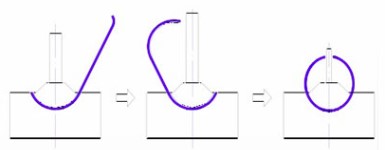
(a) J-shaped stage (b) C-shaped stage (c)O-shaped stage
The entire process is controlled by a computer to achieve automatic adjustment of parameters such as step length and pressing amount to ensure forming accuracy.
II. Key Influencing Factors of Forming
(1) Material Properties
High Yield Strength and Work Hardening: The yield strength of stainless steel (such as 304, 316) is higher than that of carbon steel, and greater pressure is required for forming; work hardening is significant, and the deformation amount needs to be controlled to avoid cracking.
Springback Effect: Stainless steel has a lower elastic modulus and a larger springback amount, and the mold design needs to be optimized through overbending compensation or multiple calibrations.
Anisotropy: There are directional differences in rolled sheets, and the influence of the fiber flow direction on the bending performance needs to be considered.
(2) Stress-Strain Distribution
J/C stage: The edge area bears the maximum bending strain and is prone to work hardening; the middle part begins plastic deformation in the C stage.
O stage: When the mold is closed, the cross-section is subjected to radial pressure, and local strain concentration may occur in the weld area due to material flow.
(3) Key Forming Parameters
The core parameters of JCO forming directly affect the roundness, straightness and welding quality of the pipes, mainly including the following:
1、Stepping Distance (L2)
Definition: The transverse feed distance of the steel plate during each bending.
Range: Usually 80~170mm, which needs to be adjusted according to the mold design and the expansion rate.
2、Number of Steps (N)
Calculation formula: K=
3、Lower Die Opening
Principle: It should be less than twice the length of the pre-bent edge and not exceed 1/2 (D/2) of the pipe diameter to avoid damaging the steel plate.
4、Upper Die Radius (Rp)
Calculation: The springback amount needs to be considered, and the formula is Rp=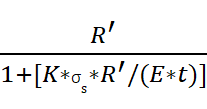
5、Lower Dead Point Y Value
Determination: Through geometric calculation and experimental adjustment, it is necessary to combine the opening amount of the steel pipe (usually 100mm) and the position of the mold to ensure that the error between the pressing depth and the theoretical value is less than 1mm.
6、Springback Compensation
The actual bending effect is smaller than the theoretical value due to the elastic springback of the material. The springback amount is about 0.8% of the plate thickness, and it needs to be pre-corrected in the pressing amount.
III. Correlation with Subsequent Processes
Welding: After forming, plasma welding, argon arc welding or submerged arc welding is required, and it is necessary to ensure that the seam closing gap is uniform (usually ≤1mm).
Sizing and Straightening: Improve the roundness through mechanical circular correction (such as the roundness error ≤0.5%*D).
IV. Conclusion
The JCO forming of stainless steel pipes achieves high-precision and low-cost production of straight seam welded pipes through step-by-step bending and precise parameter control, especially suitable for the manufacture of stainless steel pipes with multiple specifications and thick walls. Its core lies in the optimization of the stepping distance, mold design and springback compensation, and the combination of an automated system improves the process stability and achieves high-precision forming. In the future, with the continuous progress of materials science and manufacturing technology, the JCO forming process will develop in a more efficient and intelligent direction, contributing to the high-quality development of the stainless steel pipe manufacturing industry.
The Influence of Welding Process on Welding Deformation
The Application of PAW+TIG Hybrid Welding in the Manufacturing of Stainless Steel Pipes


