


The microscopic world of welding--from heat source to molten pool
In industrial production, welding is a key technology for connecting metal parts into a whole. It is inseparable from the manufacture of daily necessities to the assembly of aerospace equipment. Welding can realize metal connection, and the core lies inThe interaction between "heat source" and "melt pool". Today, we will start from the basic principles of welding metallurgy and briefly talk about the scientific process from heat source to molten pool formation during welding.
1. Welding heat source: welded"Energy engine"
If you want to melt and join hard metals, you must first have a sufficient energy source, which is the welding heat source. It's like the welding process"Energy engine" that provides power for metal melting. Different welding methods use different heat sources. The following are the common ones. They each have their own characteristics and are applicable to different scenarios.
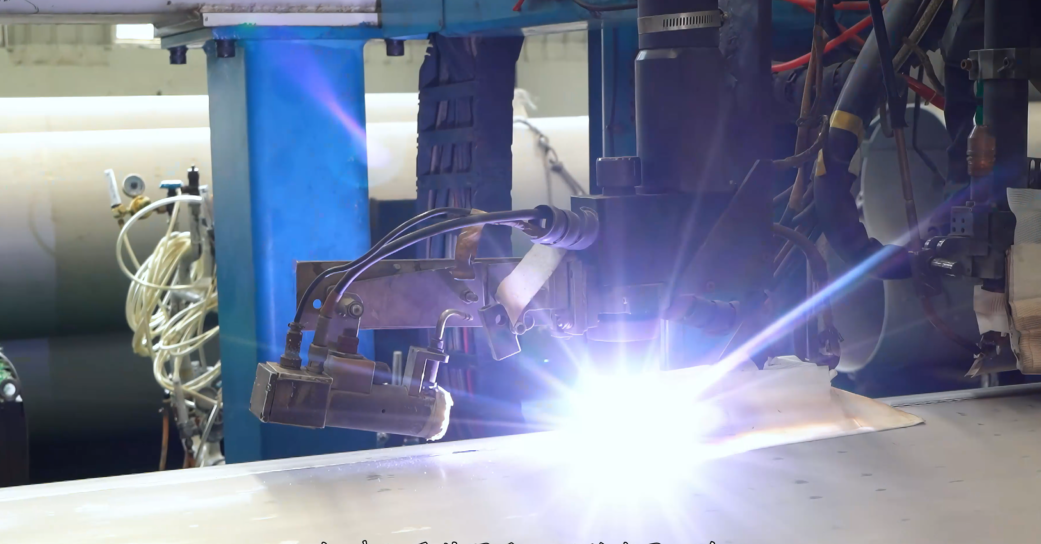
(1) Arc heat: the most widely used"Conventional Heat Source"
As the most widely used heat source in the field of welding, arc heat is based on the arc discharge phenomenon in gas media. When an arc is formed between the welding rod and the weldment, the gas is ionized to form a conductive channel, and a large amount of heat is generated when the current passes through. In manual arc welding, the welder holds a welding clamp and locally heats and melts the electrode and weldment through the arc between the electrode and the weldment. For example, in on-site welding of building steel structures, manual arc welding, with its flexible operation, can adapt to various complex welding positions and shapes to achieve reliable connections between different steel materials.. In gas shielded welding, withCO₂ gas shielded welding and argon arc welding are the most typical. CO₂ gas shielded welding is often used for welding body parts in automobile manufacturing. It has low cost and large penetration, and can meet the requirements for welding strength and efficiency in automobile production. Argon arc welding, with its inert gas shielding characteristics, can effectively prevent weld oxidation.In the welding of stainless steel, the high quality and beauty of the weld can be guaranteed.
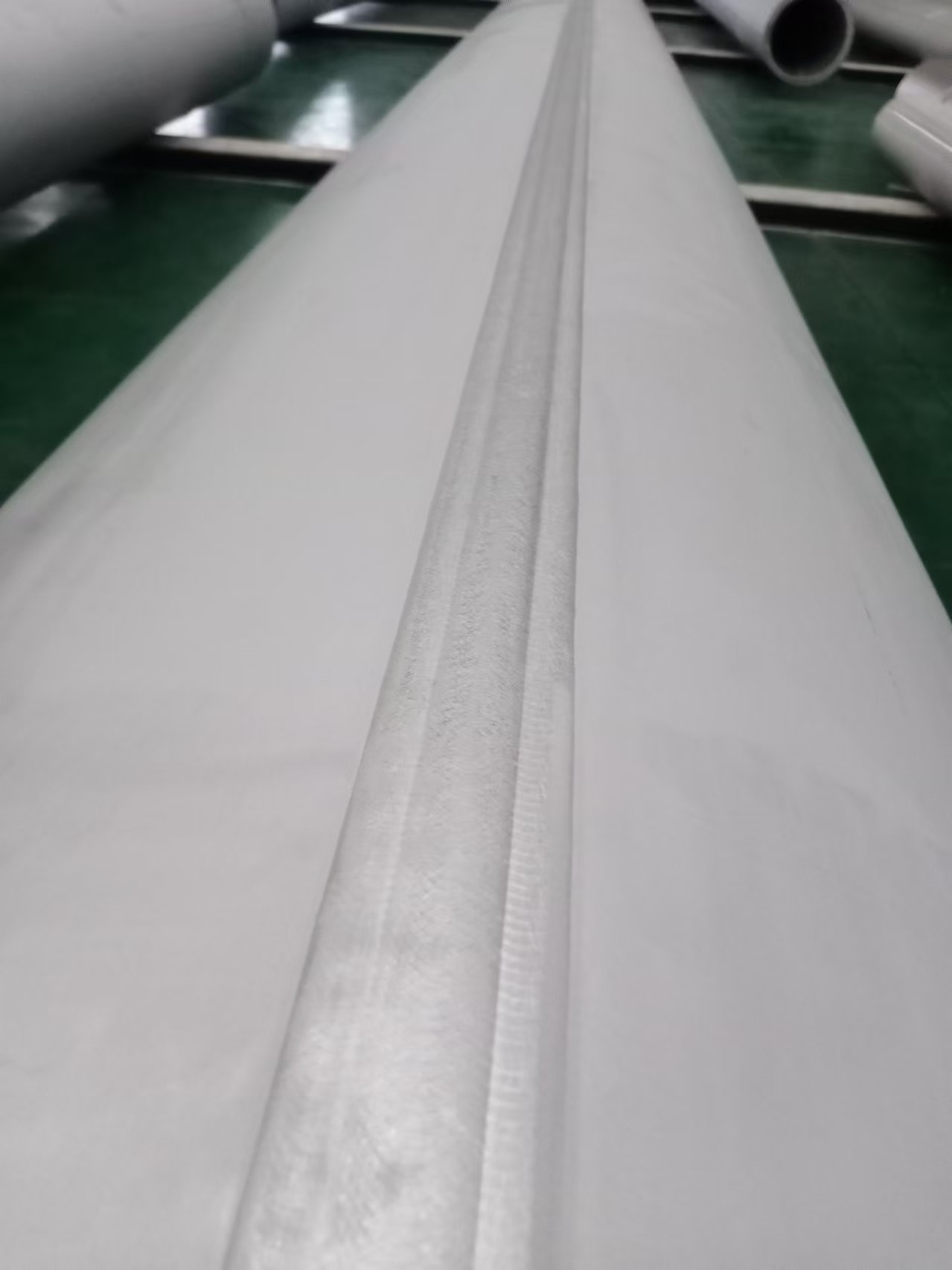
(2) Laser beam: ultra-high energy density"Precision heat source"
As a high-energy-density welding heat source, laser beam has unique advantages. It produces a high-intensity beam through stimulated radiation, and the energy is highly concentrated after focusing. The energy density of the laser beam can be as high as10⁶ - 10¹²W/cm², able to melt or even vaporize materials in an instant. In the aerospace field, laser welding technology is often used for key components such as aircraft wings and fuselage. Since these parts require extremely high strength and lightweight materials, the low heat-affected zone and high-precision characteristics of laser welding can ensure that the performance of the welded parts is not affected, while reducing the weight of the parts and improving the fuel efficiency and flight performance of the aircraft. In automobile manufacturing, laser welding is also widely used in the welding of car body structural parts, such as doors, frames and other parts. It can improve the overall strength and safety of the car body, while realizing automated production and improving production efficiency.
(3) Electron beam: in vacuum environment"Efficient Heat Source"
The electron beam heat source works in a vacuum. Its principle is to use a high-voltage electric field to accelerate electrons to achieve high speed. Then the high-speed electrons bombard the surface of the weldment, and the kinetic energy of the electrons is converted into heat energy to achieve melting and welding of the material. The energy density of the electron beam is extremely high, reaching10⁷ - 10⁹W/cm², with a large weld depth-to-width ratio, capable of welding thick plate materials, and with high welding accuracy, the welding position and penetration depth can be precisely controlled. Electron beam welding shows obvious advantages when welding high melting point and high strength materials, such as titanium alloys and nickel-based alloys. For example, in the manufacturing of aerospace engines, electron beam welding is often used for components such as turbine blades and combustion chambers. These components work in harsh environments of high temperature and high pressure, which require extremely high welding quality. Electron beam welding can meet its strict quality standards and ensure the reliability and performance of the engine.
In addition to the above three, there are also chemical heat (such as thermite welding, which uses chemical reactions to generate heat), resistance heat (such as resistance welding, the resistance heat generated by the current flowing through the metal melts the metal, often used for solder joint welding, such as the splicing of refrigerator shells), friction heat (such as friction welding, which is generated by high-speed mechanical friction and has unique advantages in welding dissimilar metals), etc. However, the scope of application is relatively narrow, so I will not go into detail here.
2. Molten pool formation: metallicThe process of "brief reinvention"
With a suitable heat source, a molten pool will then form. This is formed after the metal is melted during the welding process.The "liquid metal area" is also a key link for metal connection. We can understand the process of molten pool formation as the "short-term reshaping" of metal under the action of a heat source.
First, when a heat source (such as an arc) acts on the surface of the workpiece, the heat will be quickly transferred to the interior of the metal, and the temperature of the metal will rise rapidly. When the temperature exceeds the melting point of the metal, the metal on the surface of the workpiece will begin to melt. At the same time, if there is filler metal (such as welding rods, welding wires), the filler metal will also melt under the action of the heat source. The molten metal will gather at the welding part of the workpiece to form a liquid"Small pool", this is the molten pool.
The size and shape of the molten pool are not fixed and are affected by many factors. For example, the welding current, if the current is larger, the energy of the heat source will be stronger, and the molten pool will be larger and deeper; the welding speed is also critical. The faster the welding speed, the shorter the time the heat source stays on the workpiece, the smaller and shallower the molten pool will be; the material of the workpiece also has an impact. For metals with good thermal conductivity such as aluminum and copper, heat is easy to diffuse, and the molten pool will be relatively smaller. However, the thermal conductivity of steel is poor, and the molten pool will be easier to maintain; in addition, the type of protective gas and the shape of the welding groove (such asV-shaped groove, U-shaped groove) and the position during welding (flat welding, vertical welding, horizontal welding), will also affect the size and shape of the molten pool.
3. Heat source and molten pool: welding quality"Key Partner"
The heat source and molten pool are the most important factors in the welding process."Key partners", their status directly determines the quality of welding. Different heat sources have different effects on the molten pool. For example, the energy of arc heat is relatively dispersed, and the range of the molten pool will be larger, which is suitable for welding thicker workpieces; while the energy of laser beams and electron beams is concentrated, the molten pool is small and deep, and is suitable for welding thin-walled parts or precision components.
If you want to obtain high-quality welded joints, you must select an appropriate heat source based on the material, thickness, and requirements of the workpiece, and control the welding parameters to keep the molten pool at the appropriate size and shape. For example, when welding thin steel plates, use laser beam welding to control the current and speed to make the molten pool small and uniform to avoid burn-through; when welding thick steel plates, use arc welding and increase the current appropriately to make the molten pool deeper to ensure that the metal can be fully fused.
In short, the process of welding from heat source to molten pool formation is a scientific process based on heat transfer and metal melting. Understanding these basic principles can help us better understand welding technology and lay the foundation for subsequent learning of more complex welding metallurgy knowledge. With the development of industrial technology, welding heat source and molten pool control technology are also constantly improving. In the future, more efficient and precise welding methods will emerge to provide stronger support for industrial production.
Do you know what chemical elements are in stainless steel?
Multivariate balance phase diagram related to stainless steel welding


